Why Marketing Matters More in an AI World
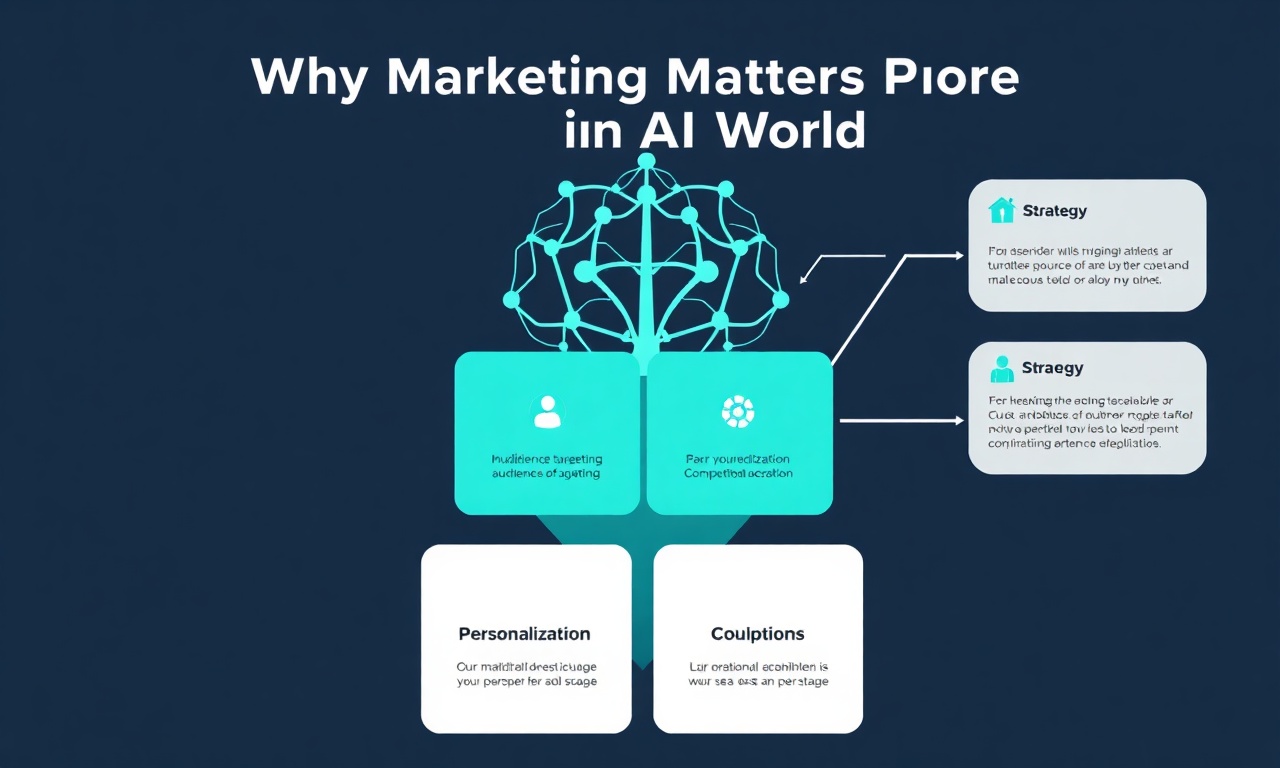
AI makes targeting faster and personalization easier, but it also raises the bar. Marketing now becomes the differentiator—turning data into trust, relevance, and brand meaning.
AI can find patterns faster than humans, but it cannot decide what your audience should feel, trust, and do. That’s why marketing becomes even more critical in an AI world—because strategy, positioning, personalization, and competition are now won by brands that use AI thoughtfully, not blindly.
In this post, we break down how AI changes audience targeting, personalization, competition, and brand strategy—and what to do next.
Marketing used to be a way to reach people at scale. In an AI world, it becomes a way to earn attention, build preference, and create demand with intention.
AI can analyze behavior, predict likely actions, and optimize campaigns in real time. But AI doesn’t automatically create clarity about your customer, the story your brand tells, or why someone should choose you over the next “smart” competitor.
Here’s why marketing matters more now—and how AI changes what marketing must do.
1) Audience targeting evolves from “who” to “why”
Traditional targeting often starts with segments: demographics, interest categories, and rough behavioral buckets. AI shifts that approach toward signals: patterns in browsing, purchase timing, device behavior, search intent, and engagement nuance.
What changes:
- Targeting becomes more predictive: AI can estimate likelihood to convert, churn, or respond.
- Targeting becomes more dynamic: audiences can shift daily based on new data.
- Targeting becomes more sensitive: privacy expectations and platform rules make data quality and consent essential.
The marketing takeaway:
Don’t let AI replace strategy. Use AI to refine targeting, but lead with customer understanding. The winning brands connect signals to real motivations—value, identity, urgency, risk reduction, or belonging.
2) Personalization moves from “recommended” to “meaningful”
AI-powered personalization can tailor content, offers, and journeys with impressive speed. But as everyone gets better at “relevance,” audiences become more discerning.
What changes:
- Personalization becomes context-aware: AI can adapt messaging to time, intent, and channel.
- Content at scale becomes easier: dynamic landing pages, automated email variations, and personalized creatives.
- Copycat risk increases: if personalization only changes headlines and not substance, it won’t stand out.
The marketing takeaway:
Meaningful personalization requires brand voice and human judgment. Use AI to deliver the right message at the right moment—but ensure the message reflects your positioning, credibility, and customer promise.
3) Competition intensifies: the “baseline” rises for everyone
In an AI world, many execution advantages become table stakes. Better bidding, faster creative testing, and smarter recommendations are increasingly available to most teams.
What changes:
- More brands can run sophisticated campaigns: optimization no longer guarantees differentiation.
- Creatives become the battleground: who can capture attention with authenticity and clarity.
- Performance pressure increases: small improvements in targeting or funnel UX can create outsized effects.
The marketing takeaway:
When execution is easier, differentiation must be sharper. Focus on:
- Clear positioning: why you, not just what you.
- Distinct content: perspectives, proof, case studies, and original insights.
- Strong customer experience: reducing friction, simplifying choices, and delivering outcomes.
4) Brand strategy becomes the anchor for AI execution
AI can generate variations, optimize journeys, and automate workflows. Without brand strategy, that momentum becomes random—more activity, less meaning.
What changes:
- Consistency can drift: automated content may dilute tone or value.
- “Optimization bias” can appear: chasing metrics without reinforcing the brand promise.
- Trust becomes a differentiator: audiences reward transparency and coherence.
The marketing takeaway:
Use brand strategy as the guardrail for AI. Define your:
- Audience beliefs and decision drivers
- Brand narrative and tone of voice
- Proof points (data, testimonials, expertise)
- Content themes and conversion paths
Then let AI handle scale and testing—not the core “why.”
5) The new marketing job: turn data into trust and action
AI can tell you what might work. Marketing must decide what should work—and whether it builds long-term relationships.
In practice, this means:
- Auditing your messaging for clarity and credibility
- Building content systems that translate insights into customer benefit
- Measuring beyond clicks: retention, conversion quality, lifetime value, and brand preference
- Ensuring governance for AI outputs: accuracy, alignment, and compliance
A simple framework for the next 30 days
If you’re unsure where to start, try this:
1. Define your customer “why”: primary motivations and objections.
2. Map AI capabilities to the journey: where prediction helps and where brand must lead.
3. Strengthen proof: case studies, outcomes, and risk-reversal messaging.
4. Create an AI-ready content pipeline: consistent voice, modular assets, clear offers.
5. Test with purpose: run experiments tied to brand and conversion goals.
Final thought
In an AI world, marketing isn’t less important—it’s more strategic. AI can optimize the route. Marketing defines the destination.
If you want results that last beyond algorithms, invest in the fundamentals: positioning, personalization with purpose, and brand consistency—then use AI to scale what you already know is valuable.


Comments
Post a Comment